

Over the years, professional sports has developed into a very large business and entertainment sector, and of course large sums of money are involved. Due to the increased inflow of money into global top sports, new tools and methods for achieving sporting success and other developments have been and are constantly being introduced. Although data and statistics have always been related to sport, data analysis has today played a very important role in elite sports, largely due to technological developments and the growth of know-how. According to Yahoo Finance, the compound annual growth rate (CAGR) for sports analytics for the period 2021 to 2028 is 21.3%, which clearly indicates the growth and potential of this market.
Let's look more specifically, the relationship between sport and the data analysis and what the corresponding impacts.
Achieving victories on the sports field
The main idea and goal of data analysis is, of course, to increase athletic success - to be more successful in the competition arena. This is mainly done by video analysis, which is a good educational material for all involved, and the monitors / devices attached to the athletes, which provide extensive information about the athletic condition and what is happening on the competition site.
While video analysis is more of a tool for making sport-specific decisions and improving other tactical / technical decisions, monitors are designed to have a comprehensive view of athletes' health. The information obtained can be stored, analyzed and thus better decisions made in the future.
Continuing the example of football, today it is already common for top European clubs to have a data analyst on the team, and there are also several clubs with a separate department dedicated to it. Experts and scientists from other walks of life are often involved - for example, Manchester City, the reigning champion of the English Football League, hired a former astrophysicist to lead the analytics department.
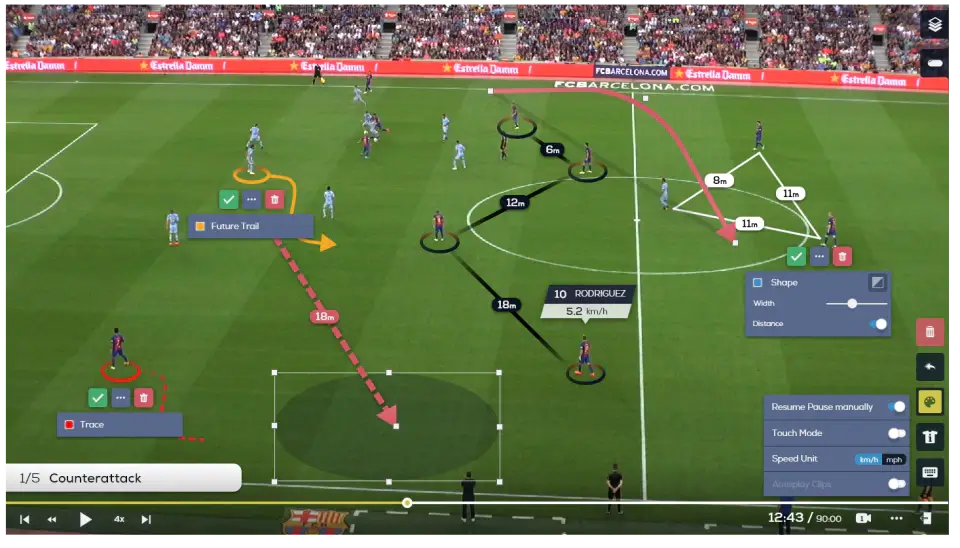
PHOTO: Metrica Sports
Analysts are also tasked with creating various metrics / indicators to measure team and player performance. A common example of football is Expected Goals (xG), which expresses the probability that a shot will end with a goal, while taking into account the characteristics of the shot and the events that preceded the shot. This, too, has had an impact on the overall change in the game, as since the introduction of xG in the English Premier League, for example, the average shot distance has decreased year by year - in other words, shots are taken closer to the goal.
Stats-based decisions
Another very important application of data analysis in the field of sports is related to the recruitment and scouting of athletes. In addition to the cognitive and instinctive side, data analysis has also become more central in this area. To date, there are many notable examples of sports clubs that have been able to deliver great results, with an analytical approach playing a major role. Although such approaches are now common in most organizations, the success stories of small and less financially capable clubs have, for obvious reasons, gained more attention. For example, Brentford FC, now playing in the English Premier League, is one example whose recruitment policy has been strongly linked to player statistics. This operating philosophy is an example of how a competitive advantage over more affluent teams can be achieved.
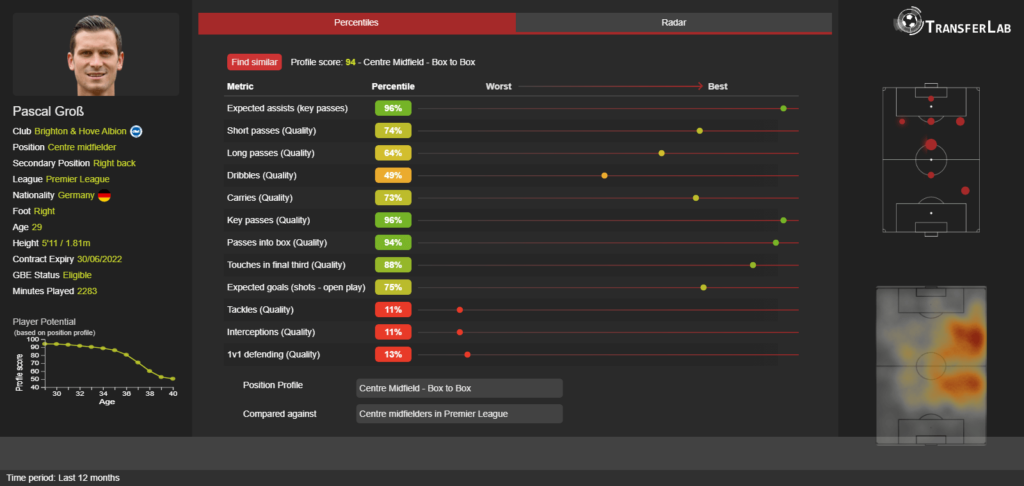
PHOTO: Analytics FC
In addition to clubs / organizations, this practice is now also more common among players. For example, Kevin De Bruyne, a Belgian player from Manchester City, used the British data analysis company Analytics FC to negotiate his contract. Although traditionally the parties in such cases are representatives of a sports club and athletes (sports agent), the behavior of a Belgian acting without an agent received much attention. Based on the analysis created by the consulting company, the athlete managed to prove even more clearly his efficiency and role in the success of the team. At the end of the negotiations, the player signed a new multi-year and higher-paid contract extension, which illustrates the capability of this approach.
In the case of Analytics FC, there is another recent example from England, where Hector Bellerin, a player of London Arsenal, found a new club in cooperation with specialists, which would match his playing style and coach's philosophy. As a result, Bellerin was loaned out to a Spanish club Real Betis, where he has made a very successful start.
The theme received widespread attention in the 2011 film Moneyball, in which Brad Pitt played the role general manager of the US baseball team Oakland Athletics, who relied heavily on analytics to recruit talented players who were left out by other clubs.
Larger involvement of supporters
Data analysis is also largely related to what happens next to sports fields. Organizations and clubs are always interested in marketing their own sport and club, as exemplified by the creation of the very popular Fantasy League in football, which aims to increase the interest and involvement of supporters in the sport (over 8 million players in the UK version). It is a virtual game where the aim is to create your own team with a limited budget, and as points are awarded on the basis of key statistics (goals, assists, etc.), it allows the participant to see the analytical and statistical side of the sport in a rather entertaining way. Due to the growing popularity of this game, it is also forcing platform creators and other infrastructure support units to make more and more efforts to develop their own technology.
Another big area is sports betting, which is strongly related to statistics and data analysis - on the part of the betting company, this requires a lot of work from the collection of raw data to the creation of coefficients and by the end user, this requires work on the relevant statistics. Thus, on the one hand, it brings more people to sports and gives more attention to the analytical side, on the other hand, it promotes a separate field.
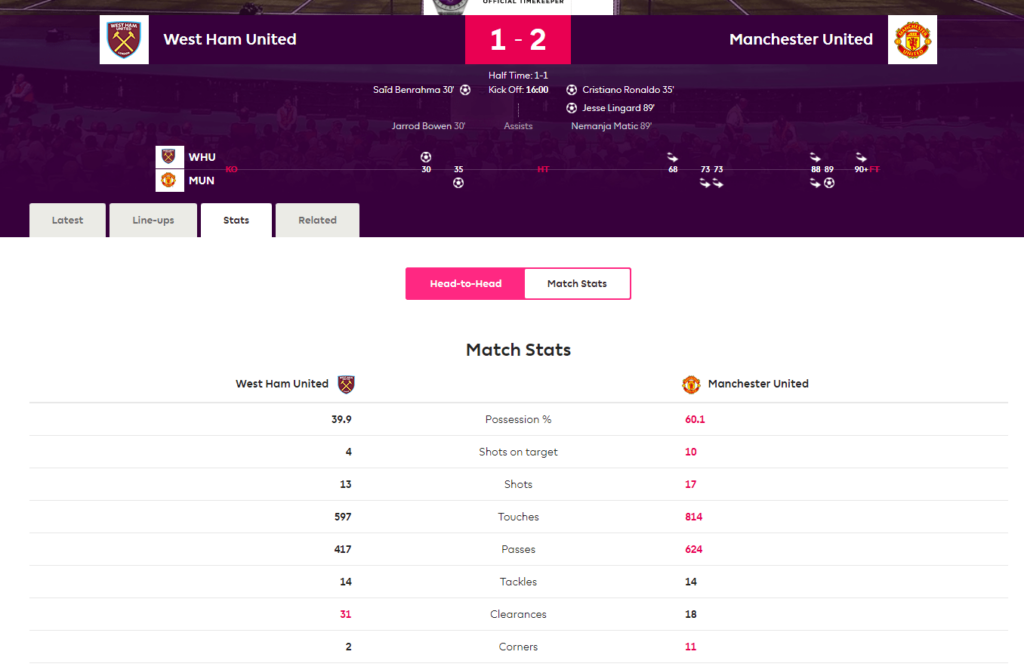
PHOTO: Premier League
In addition to the above, there have been changes in sports commentary - in addition to the usual commenting about the ongoing events, the technology allows to provide more information about statistics and thus provide a more thorough overview. During live coverage and especially at the breaks, an overview of the statistics is often displayed to help the viewer get a better idea of what is going on in the game.
The above topics and examples alone illustrate that the role of analytics in sport is growing. Thanks to the continuing growth of know-how, new technologies and the spread of information, it is exciting to see what the new changes will be, how they will affect sport and whether the success stories of small clubs will continue even when the analytics-based approach has become very widespread.